


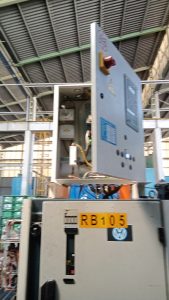
A PLC, or Programmable Logic Controller, is an electronic device used in industrial environments to control processes and automate machinery. It functions as the brain of an industrial plant, monitoring and coordinating various operations to ensure efficient and safe functioning.
Imagine you’re in a factory where products are assembled. In the past, workers had to do everything manually: turning machines on and off, controlling the speed of the assembly line, constantly checking to make sure everything was working correctly, among other tasks. This was not only tedious but could also lead to human errors and less efficient production.
With automation through PLCs, all these tasks are simplified and optimized. A PLC is essentially a small computer specifically designed to control industrial processes. It is programmed to perform a series of specific tasks, such as turning machines on and off, regulating motor speed, controlling temperature and pressure, and more.
What’s interesting is that PLCs can adapt to different situations and needs. They are programmed using a specific programming language that is relatively easy to learn. This allows engineers and technicians to design custom control systems for each application.
A PLC is basically composed of three main components:
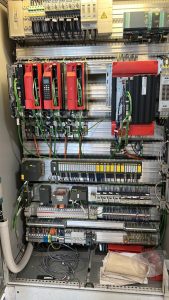
– Inputs: It receives signals from the environment, such as switches, sensors, and buttons, and converts them into digital data that it can process.
– Central Processing Unit (CPU): This is the core of the PLC, where the programs a
re executed and control decisions are made. The CPU processes the informati
on received from the inputs and determines the actions to take based on the predefined control program.
– Outputs: It sends signals to output devices like motors, valves, and lights, controlling their op
eration according to the CPU’s instructions.
The main benef
it of PLCs is their versatility and programmability. They can be adapted to a wide variety of industrial applications by programming their software.
In summary, automat
ion through PLCs simplifies and optimizes industrial processes, increasing efficiency, reducing errors, and allowing for greater flexibility in production. It’s like having an electronic brain coordinating all the activities in a factory, ensuring smooth and efficient operation.